Cyber Secure Online / The Evidence / November 2026

WHAT JUST
HAPPENED?

AMERICA UNDER ATTACK?

A week of major disruptions across critical systems raises urgent questions about infrastructure resilience, shared dependencies, operational control and national preparedness.

These events deserve forensic examination. Their proximity in time does not, by itself, establish a coordinated attack.

Illustration of American aviation, maritime, financial and digital infrastructure under operational strain

THE QUESTION IS NOT SIMPLY WHAT STOPPED. IT IS WHY SO MUCH DEPENDED ON THE SYSTEMS THAT FAILED.

The forensic record / November 12–16, 2026

FOUR INCIDENTS.
FOUR INVESTIGATIONS.

The incidents below involve different systems, industries and potential causes. Each must be investigated on its own evidence. The common architectural questions concern dependencies, failure propagation, safeguards and recovery.

November 12–13 / Digital communications

WHEN COMMUNICATIONS BECAME A DEPENDENCY

A reported Microsoft 365 disruption affected access to cloud communication and collaboration services, interrupting dependent workflows.

Investigation focus Determine the verified incident duration, affected services, confirmed root cause, recovery sequence and extent of customer impact.

Architectural question: How independently can organizations operate when a major cloud communications provider becomes unavailable?

Primary-source research: Microsoft service health

November 13 / National aviation

WHEN AMERICA'S AIRSPACE STOPPED

Reports described a nationwide FAA ground stop associated with telecommunications and air-traffic-system instability.

Investigation focus Establish the FAA's confirmed timeline, affected facilities, technical failure chain, safety response and final investigative findings.

Architectural question: What safeguards prevent failures in shared communications infrastructure from spreading across a national operational network?

Primary-source research: FAA Newsroom

November 13 / Maritime infrastructure

THE MISSISSIPPI RIVER COLLISION

Reports described a collision involving a tanker and a passenger vessel near New Orleans, raising questions about navigation, vessel controls and emergency safeguards.

Investigation focus Confirm vessel identities and ownership, navigation conditions, mechanical findings, oversight responsibilities and the final determination of cause.

Architectural question: How are critical transportation corridors protected against mechanical failures, operational errors and deliberate threats?

Primary-source research: NTSB Investigations

November 16 / Financial services

WHEN BANKING ACCESS FALTERED

Reports of customer-facing banking difficulties raise questions about the continuity of digital financial services and the systems supporting everyday commerce.

Investigation focus Verify the affected institution and services, duration, confirmed technical cause, customer impact and recovery measures before publishing definitive conclusions.

Architectural question: What alternatives exist when customers cannot access the digital services on which their financial lives depend?

Investigative status: Awaiting independently verified incident-specific primary documentation.

The architecture of vulnerability

DIFFERENT INCIDENTS.
THE SAME HARD QUESTIONS.

We must distinguish malicious attacks from accidents, defects and operational failures. But every category can reveal weaknesses in the architecture of systems essential to modern civilization.

Who controls the infrastructure on which essential operations depend?
How far can one failure propagate beyond its point of origin?
Which critical functions can continue when shared systems become unavailable?
Are recovery capabilities genuinely independent—and have they been tested?

Cyber Secure Online / The Evidence

THIS IS NOT ABOUT FEAR.
IT IS ABOUT PREPAREDNESS.

We cannot engineer a world in which nothing ever fails. But we can stop assuming that trusted infrastructure is infallible. We can design for isolation, independent recovery, verified safeguards and continuity.

The next step is to examine the earlier incidents that revealed these vulnerabilities long before this week.

Cyber Secure Online / The Evidence

THE FAILURE WAS REAL. THE CONSEQUENCES WERE GLOBAL.

Millions of devices disrupted. Healthcare services interrupted. Critical cloud dependencies exposed.

These events were not identical. Some resulted from cyberattacks. Others resulted from software defects or operational failures. But they revealed a common danger: organizations can inherit risks from systems they do not own, operate, or fully control.

Global infrastructure failures affecting
    aviation, healthcare, and digital systems
THE QUESTION IS NOT ONLY WHAT FAILED. IT IS WHY SO MUCH DEPENDED ON WHAT FAILED.

Case 01 / July 19, 2024 / Defective Software Update

CROWDSTRIKE: WHEN PROTECTION BECAME DISRUPTION.

A defective CrowdStrike Falcon content update caused widespread Windows system failures. Microsoft estimated that approximately 8.5 million devices were affected. Airlines, airports, and other critical services experienced major disruption.

What Happened

A faulty update distributed through a trusted endpoint security product caused affected Windows systems to crash. This incident was not a cyberattack.

What It Exposed

A widely deployed security component can create concentrated operational risk when defective changes reach critical systems.

ENGINEERING LESSON: Security controls need rigorous deployment safeguards, staged updates, recovery procedures, and tested operational continuity.

Primary sources: Microsoft incident statement | CrowdStrike SEC filing

Case 02 / February 2024 / Ransomware Cyberattack

CHANGE HEALTHCARE: THE DEPENDENCY BEHIND THE DEPENDENCY.

A cyberattack against Change Healthcare disrupted healthcare claims processing, payments, and related services across the United States. Providers faced financial and operational consequences even though their own systems were not necessarily breached.

What Happened

An attack on a major healthcare technology intermediary interrupted services used by hospitals, pharmacies, physician practices, and other healthcare organizations.

What It Exposed

Essential healthcare operations can depend on a concentrated network of intermediaries. A compromise at one provider can affect organizations far beyond the initial victim.

ENGINEERING LESSON: Identify critical intermediaries, evaluate upstream security, and establish tested alternatives for essential financial and patient-care workflows.

Primary sources: CMS disruption assessment | UnitedHealth restoration update

Case 03 / October 19–20, 2025 / Cloud Service Disruption

AWS: WHEN A SHARED SERVICE BECAME A SHARED FAILURE.

An AWS service disruption in its Northern Virginia region began with DNS resolution problems affecting DynamoDB endpoints. The incident affected dependent services and customer operations, with recovery continuing after the initial DNS problem was mitigated.

What Happened

A regional infrastructure failure caused service errors and cascading operational effects across dependent cloud services.

What It Exposed

Multiple applications and services can share hidden dependencies. Recovering the initiating component does not necessarily restore every dependent service immediately.

ENGINEERING LESSON: Map transitive dependencies. Test regional failures, degraded operations, recovery sequencing, and genuine independence of critical services.

Primary sources: Amazon incident update | AWS post-event summary

THE INCIDENTS ARE DIFFERENT. THE QUESTIONS ARE UNIVERSAL.

QUESTION 01

Who Controls the Change?

Which vendors can update, modify, or interrupt critical components? What prevents a defective change from spreading?

QUESTION 02

Where Does Trust End?

Which identities, services, integrations, and upstream providers are trusted? How is that trust verified?

QUESTION 03

What Fails Together?

Do supposedly independent systems share infrastructure, authentication, DNS, communications, or power?

QUESTION 04

Can Operations Continue?

If a critical provider becomes unavailable, can essential services continue safely? Has recovery been tested?

THESE WERE NOT JUST TECHNOLOGY FAILURES.

They were reminders that our digital infrastructure has become inseparable from our daily lives, our businesses, and essential services.

No organization can eliminate every dependency or guarantee that every provider will remain available and uncompromised.

But we can identify those dependencies, challenge unnecessary trust, reduce shared failure points, and engineer systems that recover.

THE EVIDENCE IS CLEAR. WE MUST BUILD DIFFERENTLY.

HEADS DOWN. HANDS ON. SECURITY FIRST.

Return to the CSO Homepage

Cyber Secure Online / The Evidence / Section 03

THE ARCHITECTURE
WE MUST CHANGE.

WE DOCUMENTED THE FAILURES. NOW WE MUST CONFRONT WHAT MADE THEM POSSIBLE.

The lesson is not that every disruption has the same cause. It is that the systems supporting modern life must be engineered to withstand accidents, defects, operational mistakes and deliberate attacks.

Security cannot end at preventing intrusion. It must also preserve essential operations when trusted technology fails.

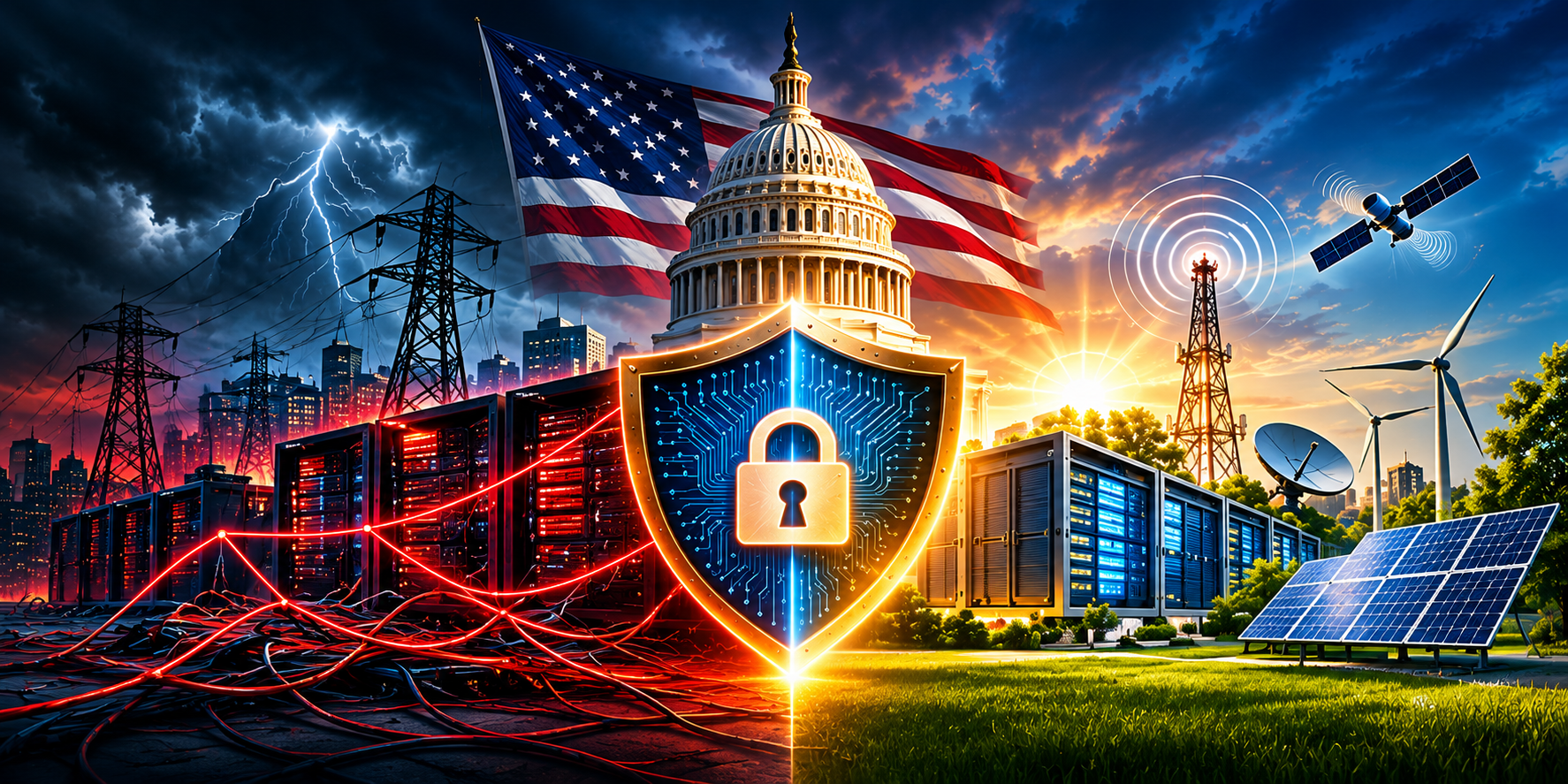
Illustrative contrast between fragile interconnected infrastructure and independently resilient systems

WE BUILT SYSTEMS TO WORK TOGETHER. DID WE BUILD THEM TO SURVIVE APART?

The architectural findings

FIVE WEAKNESSES
WE MUST CONFRONT.

These are architectural risk categories to examine across the investigations. They are not assertions that every incident involved every weakness.

01 / DEPENDENCY

Shared Points of Failure

Organizations may operate independently while relying on the same cloud platforms, networks, software components or service providers. A common dependency can become a common failure.

02 / CONTROL

Concentrated Authority

A small number of platforms may control critical changes, identity services, communications or operational pathways. Their decisions and failures can reach far beyond their own organizations.

03 / TRUST

Inherited Assumptions

Trusted vendors, familiar systems and long-established integrations can become unquestioned assumptions. Trust must be continuously verified against real technical and operational risks.

04 / ISOLATION

Insufficient Failure Boundaries

Redundant components may still share the same control plane, identity provider, network dependency or failure mechanism. True resilience requires independent failure boundaries.

05 / RECOVERY

Untested Continuity

A recovery plan is not proof of recovery. Organizations must test whether essential operations can continue when primary systems and trusted providers are unavailable.

06 / ACCOUNTABILITY

Unclear Ownership of Risk

When infrastructure spans multiple vendors and organizations, responsibility for testing, monitoring, recovery and failure prevention can become fragmented. Accountability must be explicit.

The engineering response

STOP ASSUMING.
START ENGINEERING.

Resilience is not another dashboard, another security product or another promise of uninterrupted service. It is a measurable property of how systems are designed, operated, tested and recovered.

01

Map Every Critical Dependency

Identify upstream providers, shared control planes, identity dependencies, network paths and hidden points of concentration.

02

Design Independent Failure Boundaries

Isolate essential functions and prevent one defect or disruption from propagating across otherwise independent operations.

03

Verify Trust Continuously

Validate software changes, privileged components, vendor dependencies and security assumptions throughout the operational lifecycle.

04

Build Recovery Outside the Failure

Ensure that backup communications, restoration capabilities and continuity procedures do not depend entirely on the same infrastructure that has failed.

05

Prove Resilience Before It Is Needed

Conduct realistic failure exercises, test recovery times, document responsibilities and verify that essential services remain available under degraded conditions.

Cyber Secure Online / The Engineering Mandate

RESILIENCE IS NOT
A LUXURY.
IT IS A NECESSITY.

We cannot return to a disconnected world. Nor should we abandon the benefits of modern technology.

We must engineer forward—with verified trust, controlled dependencies, stronger isolation and independently tested recovery.

Think Differently. Engineer Securely. Protect What Matters.

The Evidence | Section 04

WE ENGINEERED THE DEPENDENCIES. NOW WE MUST ENGINEER THE RESILIENCE.

We built a civilization for connectivity, efficiency, scale, and convenience. But essential services have become so interconnected that a failure in one system can threaten the operation of many.

The question is no longer simply what failed. It is whether we have preserved the ability to function when the systems we depend upon become unavailable.

What Must Be Protected

THE ESSENTIALS OF LIFE ARE NOT OPTIONAL.

Every critical infrastructure decision ultimately affects people. These eight essential functions must be protected against preventable disruption, unsustainable dependency, and failures of accountability.

01

Water

Safe drinking water, sanitation, sustainable supply, and the ability to store and recover water.

02

Food

Production, preservation, distribution, and reliable access to essential nutrition.

03

Energy

Power, heating, cooling, and independently operable emergency energy systems.

04

Shelter

Safe housing and the ability to maintain essential household functions during disruption.

05

Healthcare

Medical care, medicines, emergency response, and operational continuity.

06

Communications

Information, emergency alerts, coordination, and alternative communication pathways.

07

Transportation

Movement of people, medicine, food, emergency supplies, and essential goods.

08

Security

Protection of people, digital systems, physical infrastructure, and critical operations.

The Systemic Investigation

FIVE FAILURES WE CAN NO LONGER IGNORE.

These are the conditions that require investigation wherever critical infrastructure is designed, operated, funded, or regulated.

01

Concentration of Control

Essential services may depend on a limited number of providers, facilities, networks, or decision makers. Concentration increases the consequences of failure.

02

Engineered Dependency

Systems can become so interconnected that households, communities, and businesses lack practical alternatives when a shared dependency fails.

03

Neglected Infrastructure

Aging assets, preventable losses, insufficient maintenance, and delayed modernization can weaken essential services long before a visible crisis occurs.

04

Insufficient Independent Resilience

Backup equipment is not enough if it shares the same dependencies as the primary system. Continuity must be tested under realistic failure conditions.

05

Fragmented Accountability

When ownership of risk is divided across institutions, vendors, operators, and authorities, critical weaknesses can remain unresolved.

The Engineering Mandate

RESILIENCE MUST BE ENGINEERED BEFORE THE FAILURE.

The solution is not to abandon shared infrastructure. It is to ensure that shared infrastructure does not eliminate safe, practical alternatives.

01. Identify Every Critical Dependency

Map the systems, suppliers, resources, authorities, and connections required to keep essential services operating.

02. Eliminate Unnecessary Single Points of Failure

Design independent operating pathways, failure boundaries, and recovery capabilities that do not collapse together.

03. Preserve Safe Local Independence

Enable households, businesses, and communities to develop lawful, safe, and sustainable alternatives for essential services without unnecessary regulatory barriers.

04. Account for the Resources Already Available

Measure infrastructure losses, improve maintenance, recover usable resources, and evaluate conservation before expanding dependence on external supplies.

05. Establish Enforceable Accountability

Require transparent performance measures, independent verification, clear responsibility for risk, and meaningful remedies when obligations are violated.

06. Prove Continuity Through Testing

Demonstrate that essential operations can continue when primary power, water, communications, technology, or supply pathways fail.

The Final Accountability Question

THE ESSENTIALS OF LIFE MUST NEVER BECOME POINTS OF CAPTIVITY.

No corporation should be beyond accountability for the essential resources it controls or extracts.

No regulatory framework should unnecessarily prevent people from developing safe, independent capabilities to sustain life.

No exclusive infrastructure arrangement should be insulated from scrutiny simply because it has become longstanding, legally authorized, or difficult to replace.

The existence of legal authority does not eliminate the need to examine sustainability, fairness, public safety, and measurable consequences.

ENGINEER INDEPENDENCE.
ELIMINATE SINGLE POINTS OF FAILURE.
RESTORE ACCOUNTABILITY.
PROTECT THE ESSENTIALS OF LIFE.
Think Differently. Engineer Securely. Protect What Matters.
The Evidence | Section 05

THE NEXT FAILURE IS NOT THE QUESTION. OUR READINESS IS.

We examined the disruptions. We revisited documented failures. We identified the architectural weaknesses. And we confronted the dependencies that place essential systems at risk.

Now the investigation arrives at its most important question: What have we actually engineered to survive the next failure?

The Readiness Examination

FIVE QUESTIONS. NO ROOM FOR ASSUMPTIONS.

These questions apply to every organization responsible for essential operations—and every community dependent upon them.

01

What Must Never Stop?

Identify the functions essential to life, safety, security, and operational continuity. Establish acceptable interruption limits and recovery priorities.

02

What Do We Depend Upon?

Map critical suppliers, utilities, software, networks, infrastructure, people, and resources—including dependencies hidden behind vendors.

03

What Happens When They Fail?

Identify cascading consequences. Determine whether a single disruption can disable multiple services, recovery systems, or communities.

04

Can We Operate Independently?

Test whether alternative power, water, communications, technology, and supply pathways can sustain essential functions when primary systems are unavailable.

05

Who Is Accountable?

Establish named ownership of prevention, maintenance, continuity, recovery, and independent verification. Require evidence of performance, not assurances alone.

The Final Forensic Finding

A FAILURE DOES NOT HAVE TO BECOME A CATASTROPHE.

We cannot prevent every equipment malfunction, software defect, natural disaster, cyberattack, or operational mistake.

But we can examine the architecture that allows one failure to spread across essential systems.

We can identify shared dependencies, isolate critical functions, preserve independent operating capabilities, and verify recovery before an emergency occurs.

Resilience is not proven by the existence of a backup plan. It is proven by demonstrating that essential operations can continue when the primary systems are no longer available.

The Verdict

WE CANNOT PREVENT EVERY FAILURE. BUT WE CAN STOP ENGINEERING SYSTEMS THAT TURN ONE FAILURE INTO A CATASTROPHE.

The engineering principles are understood. The warning signs are visible. The responsibility is measurable.

What remains is the willingness to confront the dependencies we have created, challenge the assumptions we have accepted, and demand evidence that essential systems can survive.

THE FUTURE OF RESILIENCE WILL NOT BE DETERMINED BY WHAT WE PROMISE. IT WILL BE DETERMINED BY WHAT WE CAN PROVE.
Think Differently. Engineer Securely. Protect What Matters.